Why Do We Keep Doing What We Know Is Bad for Us?
Why do we keep doing things we know aren't good for us? The answer may have less to do with weakness and more to do with habit, emotional soothing, and conditioning....


Oppositional defiant disorder is a pattern of disobedient, hostile, and defiant behaviour directed towards authority figures.

At some fairly early point in our lives, we solidify our perspective -- the way we look at the world -- into a filter through which all our senses pass. Turning your world upside down by learning to see it from another's point of view rearranges habitual patterns.

Nobody wants to feel hopeless. There are some who attach themselves to it because they know nothing else. Even people who are suicidal don't want death as much as they want the pain to stop.
Children as young as 5 have a nuanced understanding of fairness, according to a new study.

Although the healing process can really occur in three simple steps — find your willingness to see differently, give your willingness to your Inner Therapist, and trust that it is done — I find that I often need more ways to separate myself from the ego because it hangs on so tightly. Or, perhaps, because I hang on to it so tightly.
New research digs into how setbacks affect the pursuit of our goals, such as weight loss.
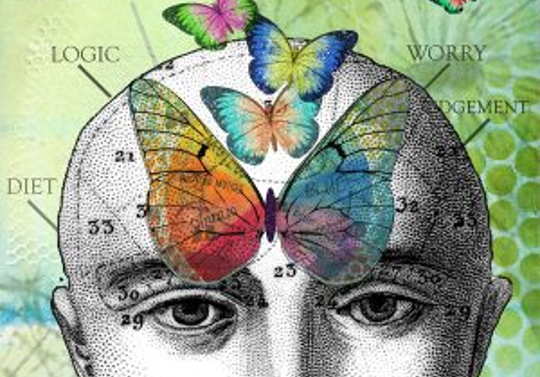

Benjamin Hardy emphasizes that shifting perspective on problems can significantly reduce their perceived intensity. By understanding that negative experiences can lead to growth, individuals can overcome hesitation and discover motivation through action. Recognizing the value of challenging emotions is crucial for personal development and adapting effectively to life’s hurdles.

Our actions have consequences. Most of the time, we are unaware of any except perhaps the most immediate of these consequences. We are like a person who has dropped a pebble into a pond and can only see, at best, one ripple the pebble made in the water.

The heart is a key concept in shamanism, a specialized term that refers to one’s deep source of aliveness, spiritual center, soul, or core. The word core itself comes from the French word coeur, meaning “heart.” It is understood to mean our individual, localized expression of the Great Spirit, God, or Universal Consciousness. It is our individual wave moving upon the greater sea of spirit.

Happiness is a crucial aspect of life, yet many struggle to achieve it. This article outlines practical inner and outer activities that can enhance joy, love, and peace. From self-affirmation and emotional expression to community engagement and nature appreciation, these strategies offer a comprehensive approach to cultivating happiness in everyday life.

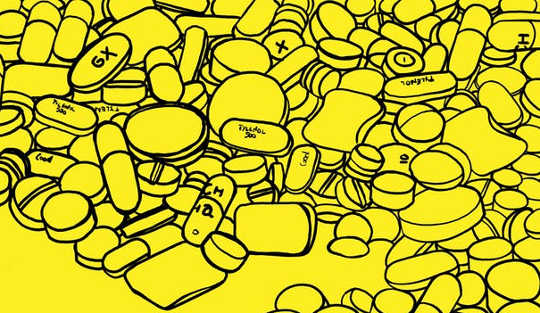
With all the freedoms independent living entails, it’s maybe not surprising then that drug use tends to be much higher among students than the general population.

Anti-immigrant policies, race-related demonstrations, Title IX disputes, affirmative action court cases, same-sex marriage litigation. These issues are continually in the headlines. But even thoughtful articles on these subjects seem always to devolve to pitting warring factions against each other: black versus white, women versus men, gay versus straight.

Hippocrates, the father of Western medicine, proposed that there were four distinct personality types. His theory was that a person's personality type determines their vulnerability to mental dysfunction and their susceptibility to illness.
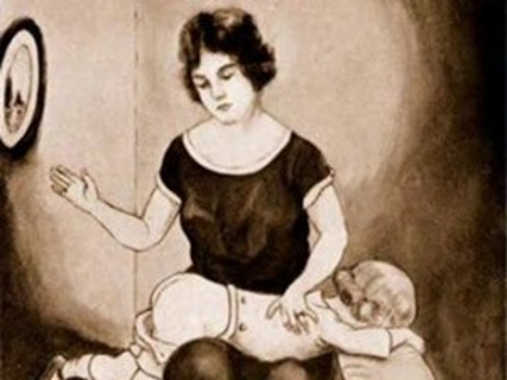
Three out of four pediatricians disapprove of spanking, research finds.

New research shows that recent interactions with their environment can guide where people look.


Our identity, or ego, is the aspect of ourselves that attempts to control and plan our present and future experience. But as we all know, no matter how hard you try to control life, it somehow has a way of changing those plans.

I interviewed numerous people who have regrettable ink and most admit their decision to get a tattoo was impulsive and not really contemplated. Their experiences with having a bad tattoo included suffering from severe depression and panic attacks. Some people even resort to therapy and antidepressants over a bad tattoo.
Immediate rewards may boost motivation more than waiting to reward yourself until the end of a task, according to new 

research.
Mounting evidence that social media-friendly “fake news” may have shaped the outcome of the 2016 election has strengthened the conviction of some that US politics are uniquely and newly broken.

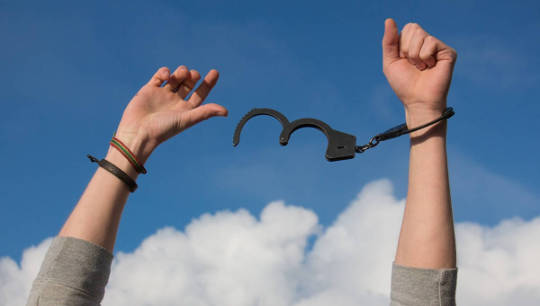

Awakenings often arise from significant life events, leading to a journey of spiritual development and self-discovery. This process involves purgation, solitude, and a move away from ego, ultimately guiding individuals toward love and healing in relationships. Embracing these stages can foster deeper connections with oneself and others.

If you'll pardon the levity, most of us are afraid of fear. We think it's a bad thing. Because so many of our experiences with fear have been negative, we fail to see fear as positive or useful. It is both. Let me repeat: Fear is positive and useful.