
Why Do We Keep Doing What We Know Is Bad for Us?
Why do we keep doing things we know aren't good for us? The answer may have less to do with weakness and more to do with habit, emotional soothing, and conditioning....


Most people who seek out Buddhism think that practice will enable them to eliminate their pain and provide them with a state of permanent happiness. But the reality is that all that Buddhist practice will do is help us develop the skills to cope with this constant dissatisfaction and not turn our pain into suffering.

Are you stressed? Are you so busy getting to the future that the present is reduced to a means of getting there? Stress is caused by being "here" but wanting to be "there," or being in the present but wanting to be in the future. It's a split that tears you apart inside.
People who are tolerant of ambiguity—a kind of uncertainty in which the odds of an outcome are unknown—are more likely to cooperate with and trust other people, according to new research.

Uncertainty about a potential romantic partner’s interest in you may lead you to see the person as less sexually attractive, according to a new study.



Awareness is a crucial element in transforming life's experiences into wisdom and growth. By embracing our errors and weaknesses, we can refine our skills and enhance our understanding of ourselves. This journey requires the courage to face discomfort and the willingness to learn from our mistakes, ultimately leading to mastery in various aspects of life.

While driving home one day, I noticed that someone had posted some cardboard signs along the roadside, leading guests to a party on my street. At every important choice point, there was a sign. It occurred to me that this is how Spirit gives us guidance -- we get signs when we need them...

The right to believe what one wants is often misused to defend ignorance and misinformation. This article explores the ethical implications of belief, emphasizing the distinction between belief and knowledge, and the responsibilities that accompany the right to hold beliefs. It argues that while beliefs can be personal, they also shape societal attitudes and actions.

There is a huge tendency to have way too much going on inside our minds, at the same time. Hundreds of thoughts and decisions about various things are all vying for our attention. There's also memory...

There is a meme that speaks directly to the hearts and minds of the overly self-conscious. Perhaps you’ve seen it; it goes something like this
There are many different ways in which the brain is rewired differently than the norm.


As anyone knows who’s cared for an elderly parent, it’s not easy. It’s an unquestionably sacred and transformative task, but it can also be extremely difficult. The demands placed on caregivers are huge.

Whether your relationships are as wonderful as you wish them to be or you feel that there is room for improvement, using metaphysical methods to manage and sustain them is as rewarding as is it empowering.

Each of us passes through an array of experiences that creates a beautiful but complex weaving of life. Here is how you can find impressions from your past for the purpose of directing your future...

When my husband Charlie and I conducted our study, Secrets of Great Marriages: Real Truths from Real Couples about Lasting Love, these are the practices that respondents told us had held them in good stead to grow their exemplary relationships.

Most people will experience feelings of deep loss and distress after a long-term relationship breakup.

Some couples seem blessed with everlasting love. Then, there’s the rest of us—who start running into trouble once the honeymoon is over. We encounter differences, disagreements, disappointments. Buttons get pushed. And communication breaks down as issues become increasingly hard to resolve.

The journey from a fearful worldview to one of love and harmony involves recognizing the potential for peace among all beings. By changing perceptions, individuals can foster a reality where compassion prevails over violence. This article explores how upbringing and societal influences shape our beliefs about safety and coexistence.

The biggest trap in the world to fall into is that of making careless and cruel comments about others. It is difficult not to jump in and fan the fire with our own critical take on another. It is equally as difficult to ...

It is beautiful to be alone, it is also beautiful to be in love, to be with people. And they are complementary, not contradictory. When you are enjoying others, enjoy, and enjoy to the full; there is no need to bother about aloneness. And when you are fed up with others, then move into aloneness and enjoy it to the full.

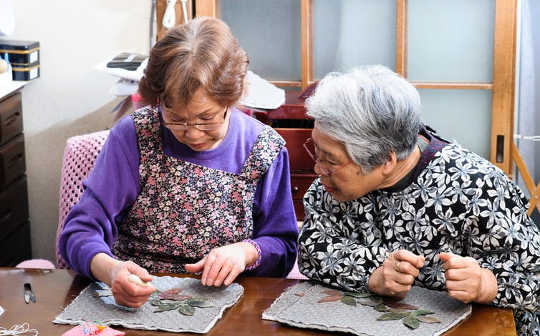
Japan has long been known for its widespread respect for its seniors and a powerful sense of obligation to care for them. Yet as the demographic structure of society has changed, and the population has progressively aged, the provision of care is increasingly seen as a social (and not exclusively a family) concern.

Focusing on what truly matters in life can be transformative. By prioritizing passions and meaningful pursuits over urgent but trivial tasks, individuals can reclaim their sense of purpose and joy. Embracing this approach leads to a more fulfilling life, where the main thing remains the main thing.