Economy
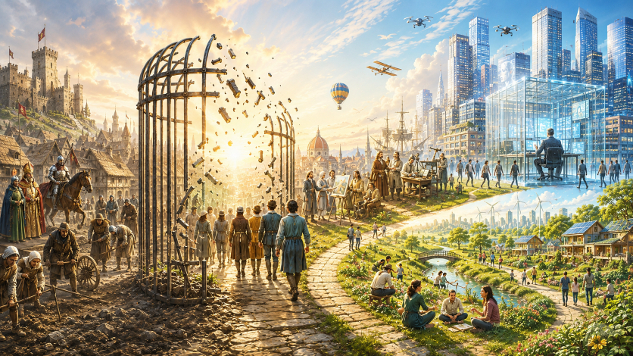
The Cage We Keep Rebuilding and What Comes Next
Something feels broken, and it isn't just your news feed. Across wealthy democracies, people are sensing that extraordinary technological power and individual freedom aren't...














 The Justice Department announced that nearly 6,000 people in federal prisons will be going home early. The move, U.S. officials told the Washington Post, is an effort to both reduce overcrowding and to provide relief to people who received harsh drug war sentences over the past three decades.
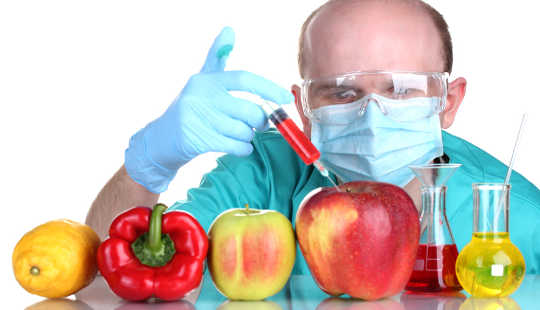 An honest discussion of genetically modified organisms must move beyond narrow concepts of human health to the wider social and environmental impacts of engineered crops. The GMO debate is one from which I’ve kept a purposeful distance.
 The latest Republican presidential primary debate had it all: denunciations of President Obama, angry rants about America’s future, and all manner of bile. It seems like a new low – but in reality, Republican candidates have been singing this tune for years.
 How much does your smart home know about you? That was the question that Charles Givre, a data scientist at Booz Allen Hamilton, set out to answer in a recent experiment. Givre has an account on Wink, a platform designed to control, from a single screen, his Internet-connected home devices, such as door locks, window shades and LED lights.
 Verizon is giving a new mission to its controversial hidden identifier that tracks users of mobile devices. Verizon said in a little-noticed
 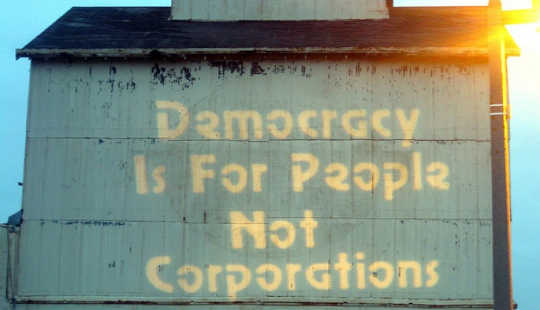 The Supreme Court twisted a 1925 law to undermine the interests of citizens, employees and small business. Companies, of course, hire arbitration firms that rule in favor of companies.
 I’ve had so many calls about an article appearing earlier this week in the Wall Street Journal – charging that Bernie Sanders’s proposals would carry a “price tag” of $18 trillion over a 10-year period – that it’s necessary to respond.
 What’s better at creating happiness – the government or the market? Conservatives say market forces should reign in all aspects of political and personal life. They say that only completely unregulated markets can create a flourishing economy.
 There’s no way around it, the headlines are disturbing. And they come, not from tabloids or click-bait blogs, but from papers published in scientific journals. They describe fish and birds responding with altered behavior and reproductive systems to antidepressants, diabetes medication, and other psychoactive or hormonally active drugs at concentrations found in the environment.
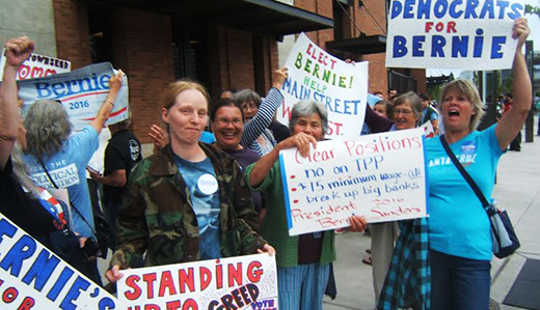 In a record-breaking turnout, 28,000 supporters crowded into the Moda Center sports arena in Portland, Oregon on Aug. 9 to hear Bernie Sanders speak.
 Pope Francis’ revolutionary encyclical addresses not just climate change but the banking crisis. Interestingly, the solution to that crisis may have been modeled in the Middle Ages by Franciscan monks following the Saint from whom the Pope took his name.
 Economists have tallied up how much it will likely cost to care for all Americans with autism spectrum disorder (ASD) this year: $268 billion. In 10 years that number is expected to climb to $461 billion, but they say it could top out at $1 trillion if ASD prevalence continues to increase.
 EU’s economic demands seek to derail small business and local communities, paving the way for multinational corporate giants. One demand is that Greece abolish any laws restricting the days or hours a business can operate despite the fact that several European countries including have enacted such policies to protect workers and small business, including Germany.
 In recent years, an increasingly bipartisan consensus around prison reform has begun to take shape, uniting policymakers in Congress who are typically on opposite sides of law-and-order issues
 Wouldn’t it be great if scientists could make their minds up? One minute they’re telling us our planet is warming up due to human activity and we run the risk of potentially devastating environmental change.
 The various incarnations of the sustainable food movement need a science with which to approach a system as complex as food and farming. Thumb through U.S. newspapers any day in early 2015, and you could find stories on President Obama’s “fast-track” plans for the Trans-Pacific Partnership, antibiotic scares and the worsening California drought
 What if a trade agreement were designed to protect and nurture labor rather than capital? On May 8th at Nike’s headquarters, President Obama
  Everyone wants to be happy, and increasingly, countries around the world are looking at happiness as an indicator of national well-being and considering happiness in policy making. As this year’s World Happiness Report states, “Happiness is increasingly considered a proper measure of social progress and a goal of public policy.” But what makes people happy, and which countries have the highest levels of happiness?
 Virtually every American community has Chinese restaurants — and the story of how this came to be is fascinating and highly revealing about the often unintended impact of U.S. immigration rules. This ethnic food industry started to grow rapidly in the early 20th century, at a time when anti-Chinese sentiment was pervasive.
 Health insurance for freelancers can be expensive. When employed by a company, health insurance is generally covered, but strike out on your own and you find yourself paying several hundred dollars or more per month for minimal coverage. As freelancers are expected to make up fifty percent of the U.S. workforce by 2020, one can’t help but think there has to be a better way—and there is.