The Cage We Keep Rebuilding and What Comes Next
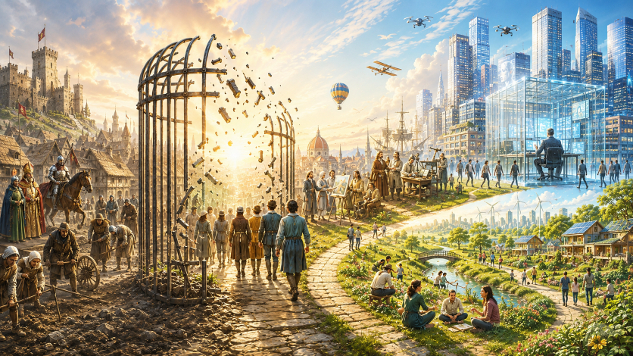
Something feels broken, and it isn't just your news feed. Across wealthy democracies, people are sensing that extraordinary technological power and individual freedom aren't...


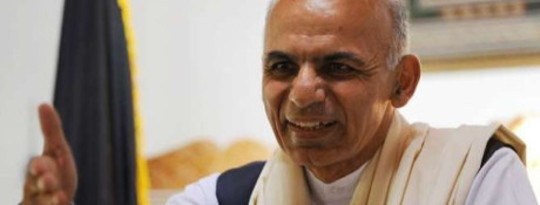
If there is one person in the world most suited to govern the turbulent land of Afghanistan, Ashraf Ghani would be, by knowledge, temperament and sense of democratic justice, that person. Lo and behold, he was just elected president of Afghanistan!

Many people nearing retirement saw much of their savings disappear as the stock market collapsed, house prices plummeted and they lost their jobs during their peak savings years. This meant that millions of workers had to draw down their savings at a point where they had planned to be accumulating wealth for retirement.

Capitalism, democracy, and liberal education are the crowning achievements of the mental age of evolution in which the mind evolves. These three represent a quantum leap in ordinary people's access to what the mind does best: process deep questions of meaning...

Each of the 125 leaders attending the New York climate summit this week has been given four minutes to speak to the world. They (or their aides) may well have dipped into the climate literature to add scientific ballast to their speeches.

The drums of war are beating once again with U.S. bombers to, in President Obama’s words, “degrade and destroy ISIS.” The Republican Party, led by war-at-any-cost Senators Lindsay Graham and John McCain, wants a bigger military buildup which can only mean U.S. soldiers on the ground.

While in the timeframe of Earth’s lifespan human events are relatively short, the imprint of even small, collective action is large. A good example in relation to food and the environment is the impact of the Neolithic revolution of farming on who we are today and the world in which we live.

On August 28, 1963, 200,000 people swarmed into the nation’s capital for one of the most iconic moments in the civil rights movement: the March on Washington for Jobs and Freedom. More often remembered today simply as the March on Washington, it was seen by many as a turning point for the civil rights movement, which helped spur passage of the 1964 Civil Rights Act and 1965 Voting Rights Act.

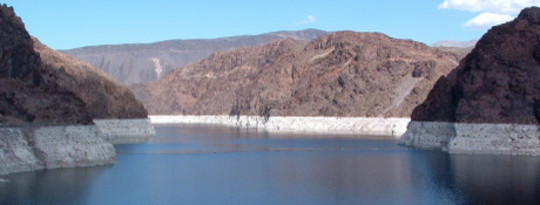
Despite what appears to be an insurmountable problem, it may be possible to significantly reduce global water scarcity in 35 years.

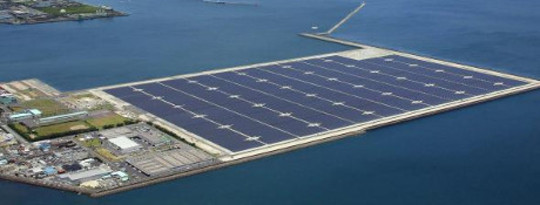
Two companies in Japan recently announced they are to begin building two huge solar power islands that will float on reservoirs. This follows Kagoshima solar power plant, the country’s largest, which opened in late 2013 and is found floating in the sea just off the coast of southern Japan.

Involuntary part-time employment has fallen by 670,000 over the last year, however it's still up by almost 3 million from its pre-recession level. While there would seem to be a very simple and obvious explanation for this one -- weak demand in the economy -- you can't employ many people saying the obvious. Hence we see a lot of nonsense in the media on the topic.

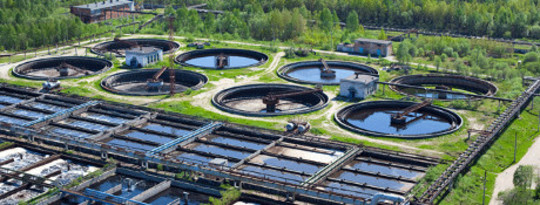
The critical links between water, sanitation, and our global consumption of energy – the “energy-water nexus” are more obvious than ever before. But how many of us will take direct action at the most basic level of all?

In the 4th century BC, Athens and nine other Greek city states defaulted on their loans from the Temple of Apollo at Delos. It was the first recorded financial crisis. Nearly 25 centuries of human evolution, progress and technological advancement later, the modern nation of Greece defaulted in 2012 as a sovereign debt panic seized Europe.
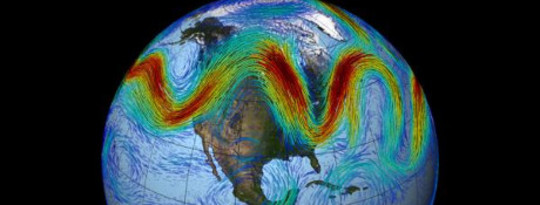
This is the year of obscure atmospheric phenomenon. The polar vortex chilled everyone’s winter. Methane releases might be carving mysterious craters in the Arctic ice. And blocking patterns got the blame for Colorado’s so-called thousand-year flood.


I believe we have a problem — a big problem. According to demographers, by the end of this century we’ll have around 11 billion mouths to feed. Most of the additional 4 billion people alive then will be in developing nations.

After a decade of relatively little rain, California is facing its third year of debilitating drought. The drought has placed a $44.7-billion-a-year agriculture industry, drinking water for millions of people, and some 204 cities located in high-risk fire zones in jeopardy.

Has the United States finally reached peak sprawl? Recent research, including a new study out of the George Washington University School of Business, suggests that the end of the era of automobile-oriented suburban growth is upon us.

Having poor people in the richest country in the world is a choice. We have the money to solve this. But do we have the will? Inequality and poverty are suddenly hot topics, not only in the United States but also across the globe.

Recently we have seen, at the level of city government, all around policies designed to build community wealth and encourage the growth of cooperative local economies. The work of grassroots developers, local foundations, community activists, and field builders is beginning to gain a foothold in the world of municipal policy...

Cooperative Home Care Associates has 2,300 workers who enjoy good wages, regular hours, and family health insurance. With an investment of $1.2 million into the cooperative sector, New York City is hoping to build on the group's success.

The summer employment rate for U.S. teens held steady at around 50% from 1950 to 2000, but began to decline dramatically in the 21st century. By 2009, it had fallen below 33%. The decline has been most pronounced for more educated and economically advantaged teens.

The deep sea is the largest habitat on earth and incredibly important to humans, but it faces many threats – from increased human exploitation to the effects of climate change. As this exploitation expands we need to decide to what extent we will try to conserve the oceans, and this is a decision that must be informed by what the oceans provide.