
Planets & Transits
New Moon in Leo August 12, 2026
The New Moon arrives in Leo August 12 at 8:36 PM UTC, and with it comes a singular...








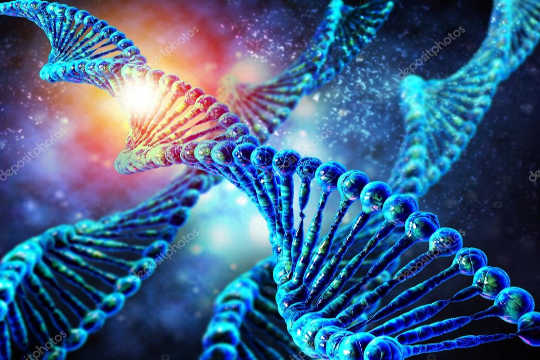 Many of our psychological traits are innate in origin. There is overwhelming evidence from twin, family and general population studies that all manner of personality traits, as well as things such as intelligence, sexuality and risk of psychiatric disorders, are highly heritable

Food critic William Sitwell has resigned as editor of Waitrose’s in-house magazine following a row over his astonishingly hostile response to a freelance journalist who proposed a series of articles on veganism.
 The World Health Organization calls stress "a global epidemic". Stress may be as American as apple pie, but it is also as worldwide as bread pudding. It doesn't matter who you are, where you live, how much money you make, or how dysfunctional your parents were...
 Every day, people try to make sense of challenges in their lives, but sometimes their explanations get in the way of solving them, psychologist Gregory Walton says in a new paper.

Holding onto grudges can lead to deep-seated anger and resentment that negatively impacts relationships and personal happiness. This article delves into the importance of forgiveness, illustrating how releasing these burdens can transform one's life and foster emotional freedom. By understanding the effects of grudges, readers can embark on a journey towards healing and emotional release.

Gratitude is noticing the good things that are happening all around you. Feeling gratitude when life is stormy can be difficult; it’s during times of hardship that our gratitude is most tested. Seeing the silver lining during those times is easier when we focus on the power of our gratitude.

As I felt the benefits of forgiving my ex-husband Werner, I began to look at other grievances and judgments I was holding. Mom was at the top of my list. Could I find my way to forgive her, too? That would require me to mourn the losses of my childhood and let them go. Holding onto my resentment to Mom kept them in place.

Being unappreciative in general and focusing on the half empty is a core attitude that Attitude Reconstruction associates with the emotion of anger. These qualities block our ability to experience the emotion of love. With the holidays approaching, it’s time to reverse your old tendency.
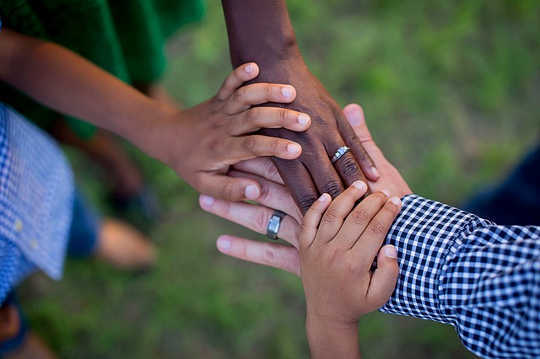
I think it is obvious that our planet Earth and its inhabitants are not all feeling the same amount of blessings of God and of the Universe. Some of us seem to be getting a bigger share of the blessings than others.
 We want life to be secure as much as we want our plans and expectations to work out. We want to live happily-ever-after. We want life to conform to our wishes, to make us happy, and to protect us from human suffering. In the end, we want life to protect us from itself, and the idea of security offers us that false consolation.
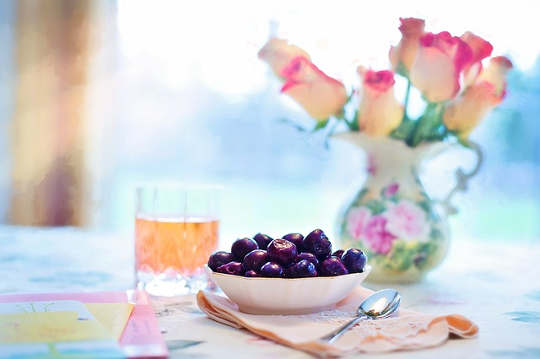 When Lynn Grabhorn was asked, “What is one simple thing I can do now to help prepare for the Shift?” her reply was, “Learn to be grateful”. She suggested the practice of extending gratitude for all the little things we take for granted and of developing an “attitude of gratitude.”

Report after report documents how—despite more technologies aimed at connecting people, ideas, and information—people of all ages continue to experience greater and greater social and personal disconnection. Why? Well, our body, mind, and spirit can only keep up with so much. When overloaded, we may disconnect because it all is too much or feels like it is too much.
 When it comes to people, there are only about a dozen life stories in the whole world, and each archetype has its own obvious characteristics.

One morning, all of us in the group revisited our childhoods to more closely examine those things that still have power over us. We did this in small groups of four persons and, when it was my turn, I revisited some physical violence from my parents. Ever eager to delve deeper, I discovered something I had never seen before.

The heart of Eastern wisdom teaches you to be naturally in the world without rejecting it. Many spiritual paths condemn and judge the world, as if they were enabling one to move beyond desires. But many fail to realize that they are desiring not to desire (a point that the Buddha understood).
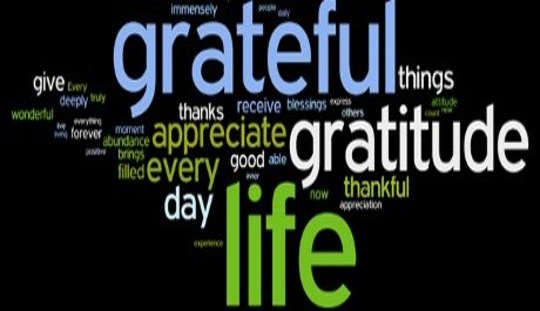
A woman Zen master named Sono taught one very simple method of enlightenment. She advised everyone who came to her to adopt an affirmation to be said many times a day, under all conditions. The affirmation was, 'Thank you for everything. I have no complaint whatsoever.'
 A new article offers a potential explanation as to why we take pleasure from the misfortune of other people, a feeling known as schadenfreude.

I find myself thinking on occasion, "I hate it when...." We use the word hate easily... We hate a certain kind of ice cream, we hate tofu, we hate hurting ourselves, we hate being late, we hate... This is where I realized that anything that we profess to "hate" is simply a preference on our part.

There are numerous things that make our life "work" for us. Some of these are things we learned along the way. And of course, there are things that make our life "not work so well". One thing that has worked for me is persistence.

The decision to choose anger over happiness is based on one factor, and that one factor is judgment. Does this person meet my expectations or not? Does this situation please me or not? Does this event conform to my morally correct and spiritually advanced view of the world or not? We basically organize our lives into two giant categories: people and things we like and people and things we don't like.

Señora Labotta stared deep into Lucina’s eyes. “You are not the only soul who has suffered in love. There is a saying I like very much. Boethius said this; ‘Commit your boat to the winds and you must sail whichever way they blow, not just where you want’.
The New Moon arrives in Leo August 12 at 8:36 PM UTC, and with it comes a singular...

A study reveals that while many online daters strive for honesty, a notable percentage...

Mars is entering Cancer on August 12 and this shift changes how you move through...

There is a moment most of us remember — standing in front of someone we loved, arms...

Recent research explores the complex dynamics of altruistic cruelty, revealing that...

You imagined the newborn haze would be hard, but you did not quite picture yourself...

What if peace of mind depends not on remembering every hurt, but on keeping only the...
Many individuals unknowingly adopt limiting beliefs from others, which can lead to...